A New Reality in the Khumbu
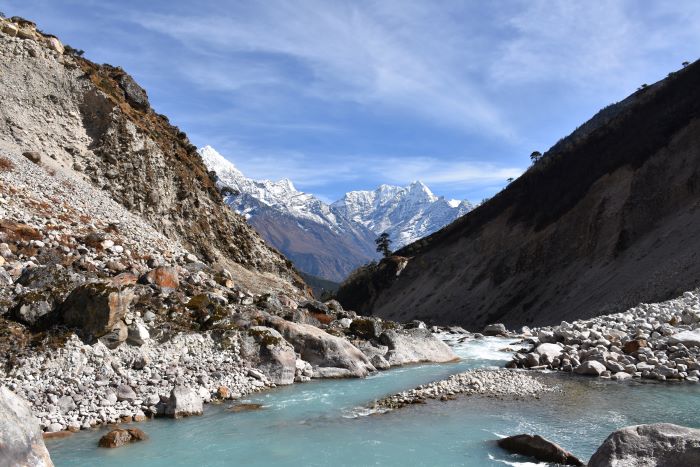
Risk has always been part of life for the Sherpa people living in the Khumbu region. Over generations, they have learned to read the terrain, adapt to changing conditions, and move through the mountains unmatched efficiency. This expertise has made them indispensable on Himalayan expeditions, where they risk their lives to help climbers reach some of the world’s highest peaks.
But warming temperatures are introducing a new kind of danger — one that doesn't follow the patterns Sherpas have spent lifetimes learning to anticipate. Glaciers that have clung to these mountains for centuries are melting at alarming rates, outpacing recent projections.
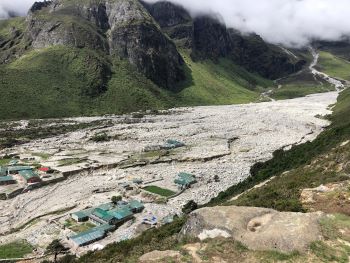
For high-altitdue adventurers, melting ice means greater exposure to avalanches and unstable slopes. But communities living lower in the mountains are facing a much deeper threat. As glaciers shrink, meltwater gathers in lakes that grow larger every year. When the natural dams holding these lakes give way, colossal walls of water, ice, and debris come crashing down through valleys — capable of erasing an entire village in minutes.
On August 16, 2024, a glacial lake outburst flood (GLOF) like this struck the village of Thame. Thankfully, no lives were lost in the disaster, as the community heard the flood coming and were able to move to higher ground. But homes, schools, bridges, and nearly everything the village relied on were swept away. Since that tragic day, the American Himalayan Foundation has worked alongside local communities to help them recover and prepare for when the next disaster hits.
Through a partnership with the Sagarmatha Pollution Control Committee, the Khumbu Pasang Lhamu Rural Municipality, and the Cryospheric Society of Nepal, AHF is supporting an early warning and community-based emergency preparedness project in Thame and the villages downstream. Central to its success has been the involvement of local scientists who bring both technical expertise and a deep understanding of the land and the people who depend on it — a combination that no other team could replicate alone.
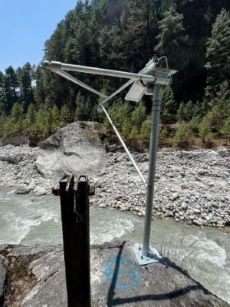
Building an effective early warning system means investing in both technology and the people who rely on it. The team installed four siren systems along the Thame Valley, along with hydrological monitoring stations at two locations that track water levels and flow velocity in real time. Alongside the equipment installation, they also established emergency response teams in each village, distributed supplies, and held trainings to ensure that when the sirens sound, people know exactly what to do.
Project Coordinator Pasang Ngima, who leads field operations, reports that the response from both the communities and local authorities has been overwhelmingly positive. Word has already spread beyond the project's original boundaries, with villages outside the target area requesting their own siren systems. This reflects just how needed this warning infrastructure is across the wider Khumbu region.
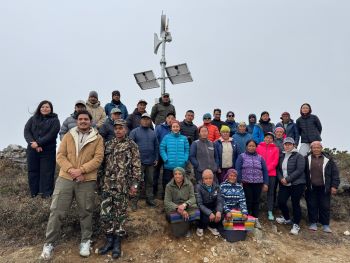
That demand also points toward something greater. The model being built in Thame, combining real-time monitoring, community training, and locally rooted expertise, is one that could be replicated across Nepal. Dozens of glacial lakes pose similar risks to people living downstream, and many of those communities have even fewer resources to prepare. What our team is learning in the Khumbu Valley today has the potential to become a national framework for GLOF resilience.
The consequences of climate change will continue to reshape life in the Khumbu region in ways that are difficult to predict. But the people who call these mountains home are resilient, and they are not facing this alone. With your support, AHF can continue working alongside these communities so that when the next disaster comes, they are as prepared as they can be.